Run Stars Without Number
from the same table, light-years apart.
Sheets, maps, ship combat, factions, ambient music. All built for one game, so the math and the ship rules are already wired up.
What it is
Your group played Stars Without Number at the kitchen table for years. Then someone moved to Portland, someone had a baby, and now half the campaign happens through a fuzzy webcam propped on a coffee mug. UnderTheTable is what we use instead. A real VTT that knows your Warrior's Specialist focus, knows the mag rifle is +3, and shows everyone the math when you roll.
We didn't take a generic VTT and bolt on a Stars Without Number module. The character sheet is an SWN sheet. Ship combat is the Operations Deck. The faction turn runs the actual faction-turn rules. Every screen exists because the rulebook describes it, not the other way around. Fewer toggles, fewer plugins, fewer house rules to wire up. You sit down and run a session.
What's in the box
Every screen below is from the actual product. No mockups, no compositing.
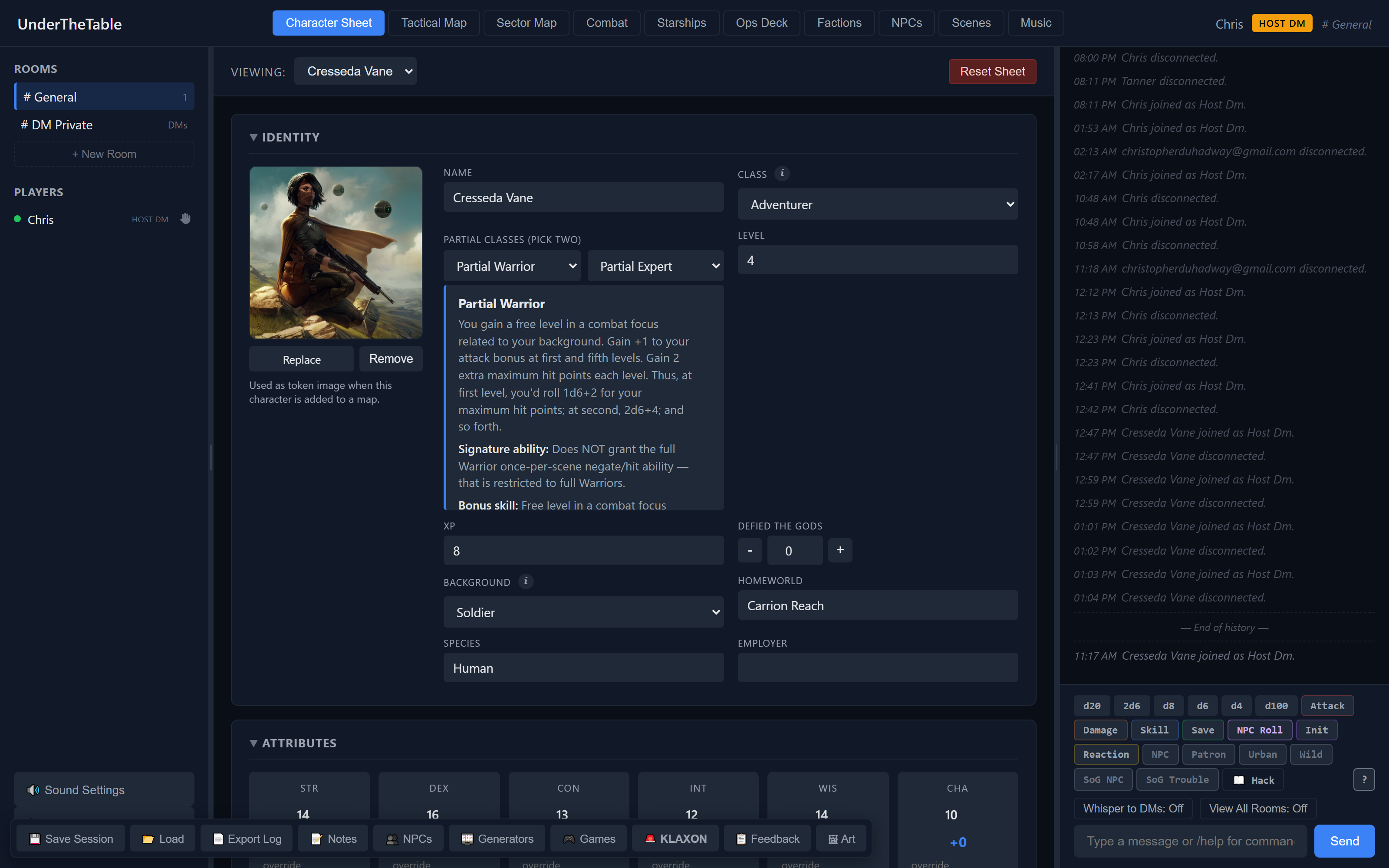
SWN character sheets
Class, focus, and background autofill. Click a dice button and chat shows the modifier breakdown, each die, and pass/fail. No more “wait, what did you actually roll?” at the table.
The skill toolbar at the bottom is the same shape on every sheet. Players hit the button, the chat tells the truth.
Real-time tactical maps
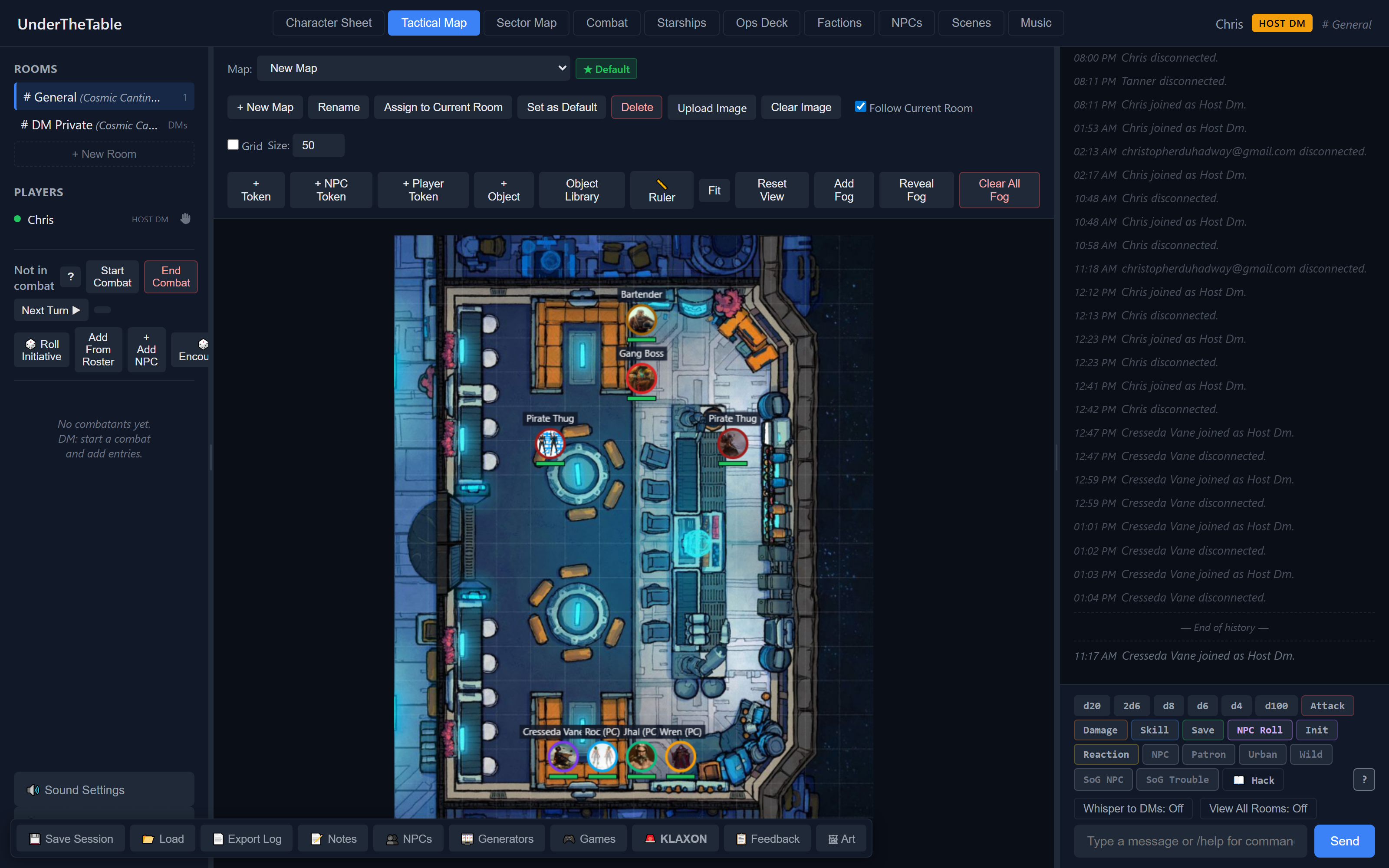
Battlemaps with shared token positions, fog of war, and per-token states. You drag a token, every player's screen moves it. No refresh, no “wait, where am I.”
Object states are first-class: doors lock and unlock, terminals toggle, traps spring. The DM owns the world; the players see the result.
The Operations Deck
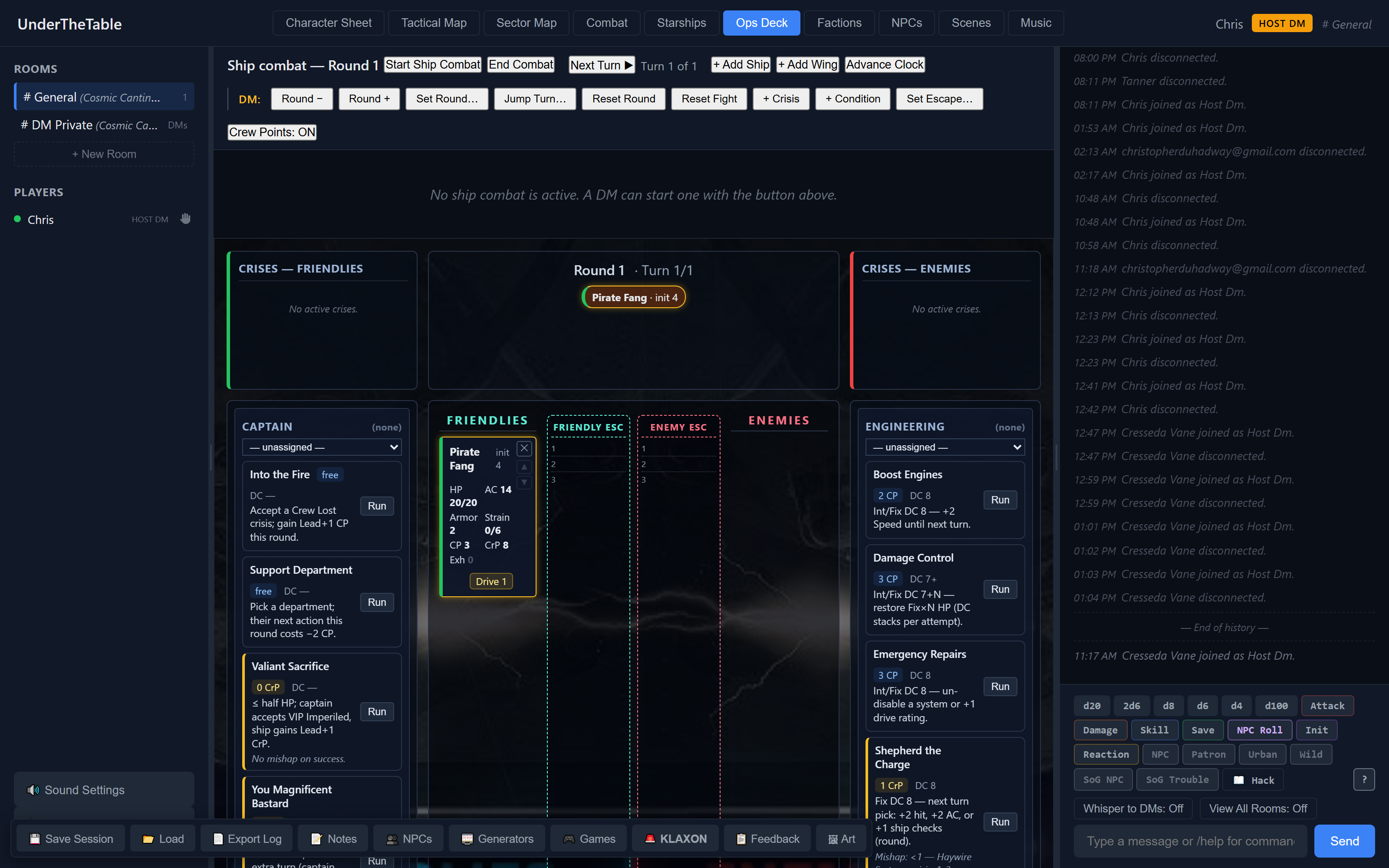
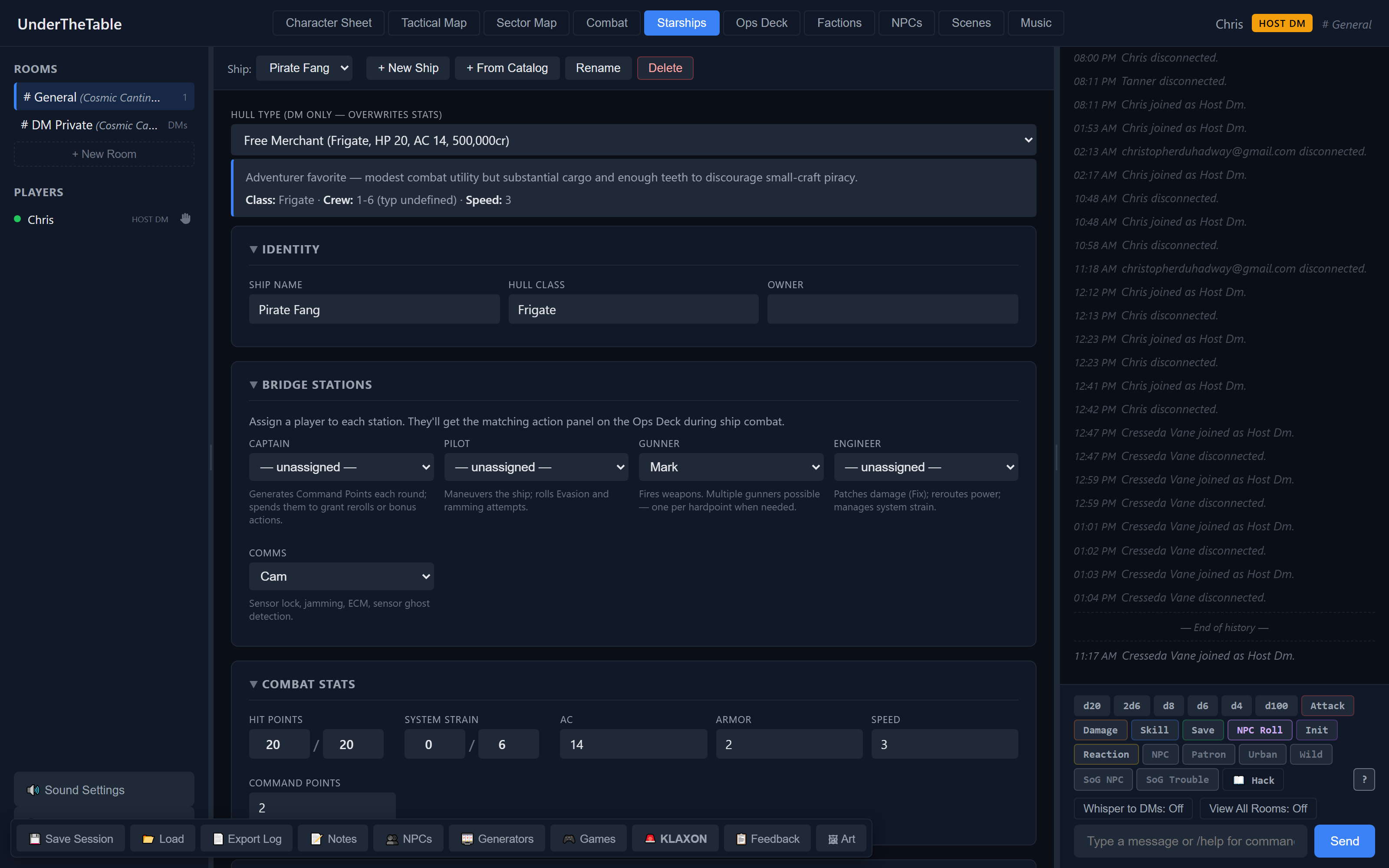
Stations for captain, gunner, pilot, comms, and engineer. Each station knows what it can and can't do this round. The gunner can't accidentally pilot. The engineer can't accidentally shoot.
Crisis cards, department orders, mission events. Multi-ship combat resolves on a phase clock so nobody has to track the rulebook's bookkeeping by hand.
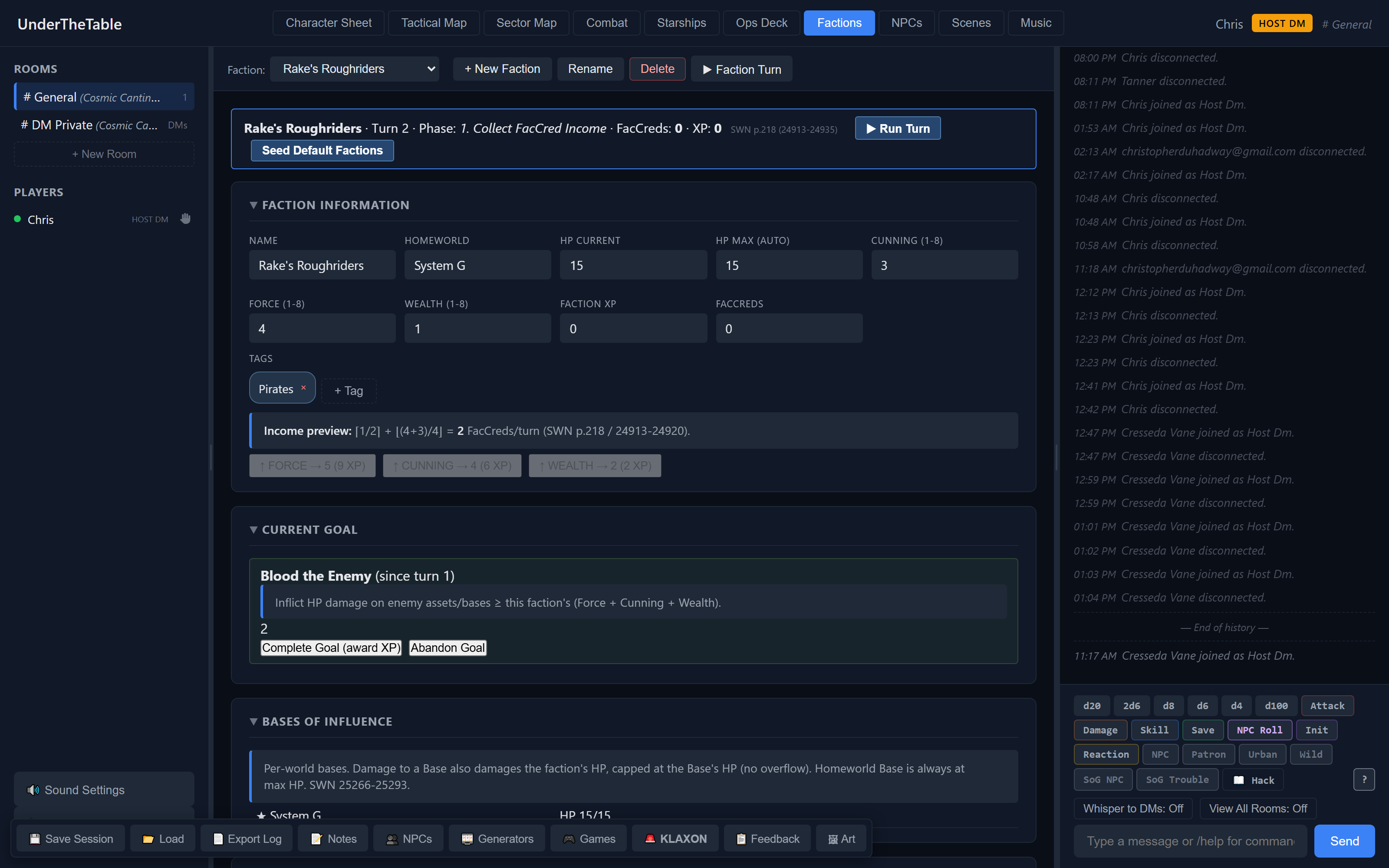
Faction turns that run the galaxy
Asset moves, action resolution, tag effects, world events. The faction turn runs whether the PCs are paying attention or not. The galaxy keeps moving between sessions either way.
Per-faction goals, treasure/forcestat/cunning tracks, bases of influence with HP and tags. The DM clicks Run Faction Turn and the next session has fresh hooks.
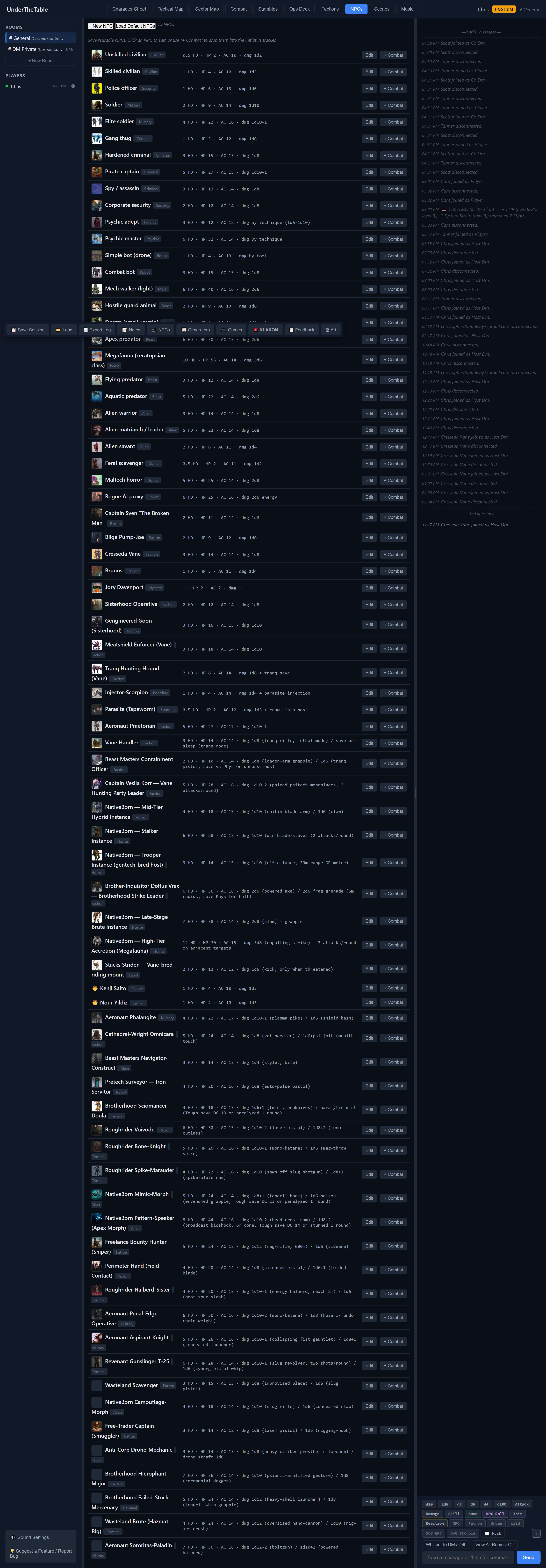
An NPC catalog with stats already filled in
Every NPC is a one-row stat line: HD, HP, atk, damage, AC, move, morale, save. Tags tell you the role at a glance. Click + Combat and they're in initiative on the next click.
Roll a stat block in two clicks. Build a roster for the campaign and reuse the gang of dockworkers across three jobs in the same sector. The catalog is per-campaign; nothing leaks between groups.
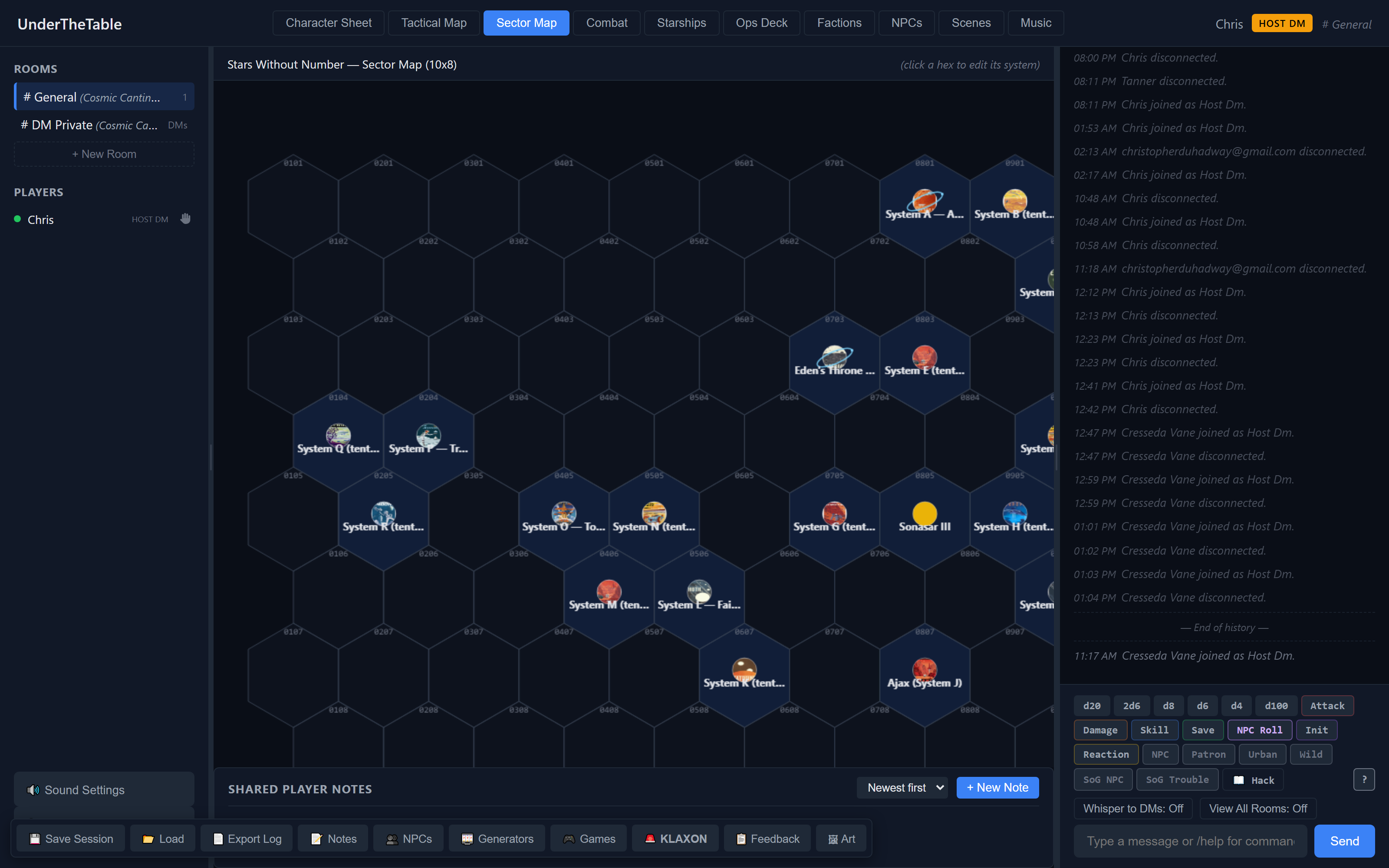
A sector they can actually navigate
Hex map with named systems, planetary tags, and the shared notes that survive between sessions. Click a system and the world tags tell you what kind of trouble lives there.
Suns of Gold trade tags wired in for the worlds you've fleshed out, rolled randomly for the ones you haven't. Authorities, antagonists, things, complications, regulations — pre-rolled per world.
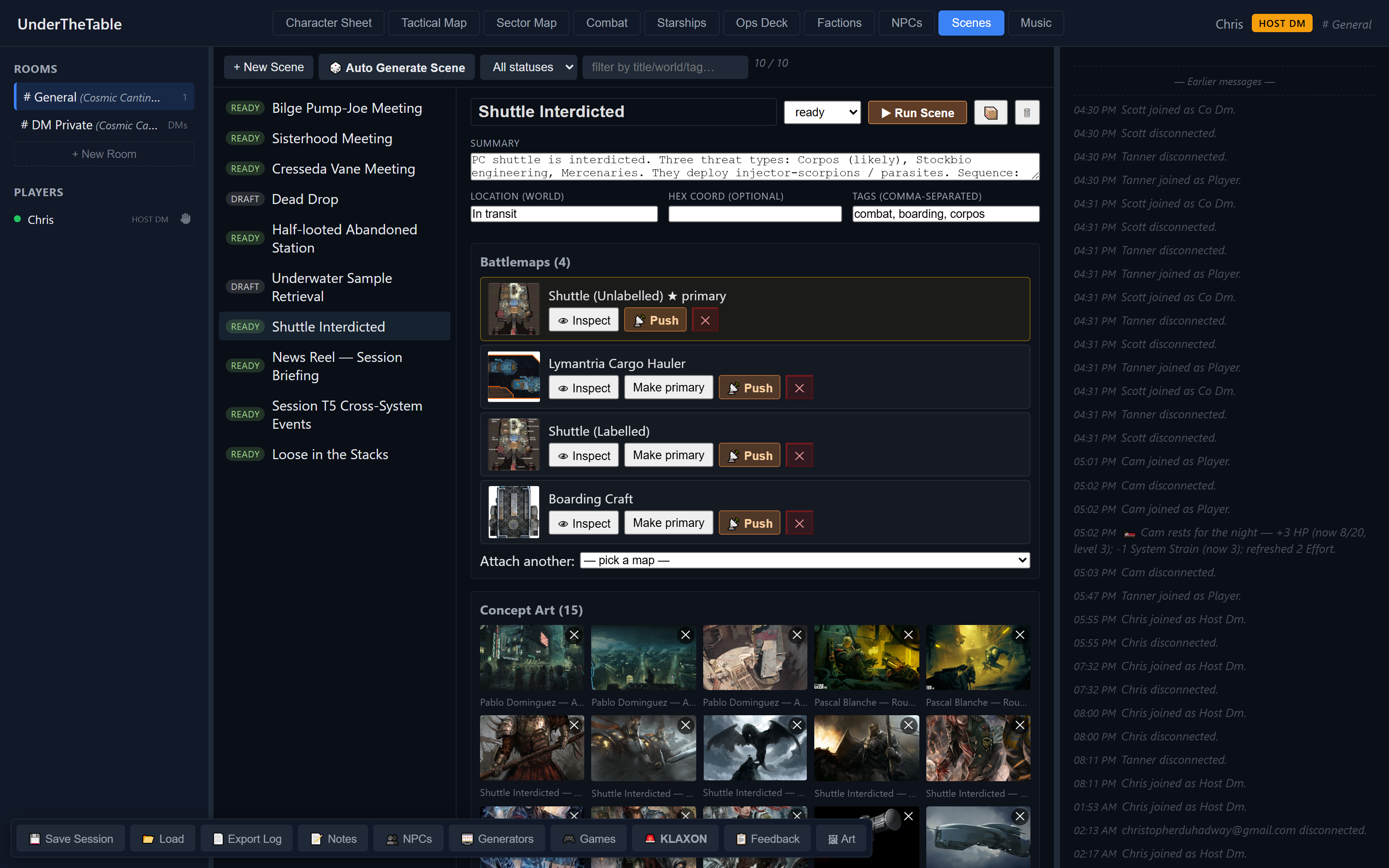
Scenes that carry their gear
Every scene pins its own battlemaps, its own NPCs, and its own art. When the PCs walk into Shuttle Interdicted, the boarding-craft battlemap is one click away and the corp guards are already in the roster.
The Push button shoves a map or a splash image onto every player's screen in real time. Status badges (READY / DRAFT) tell you which scenes you can run cold and which are still notes. The galaxy stays a click ahead.
The room you set
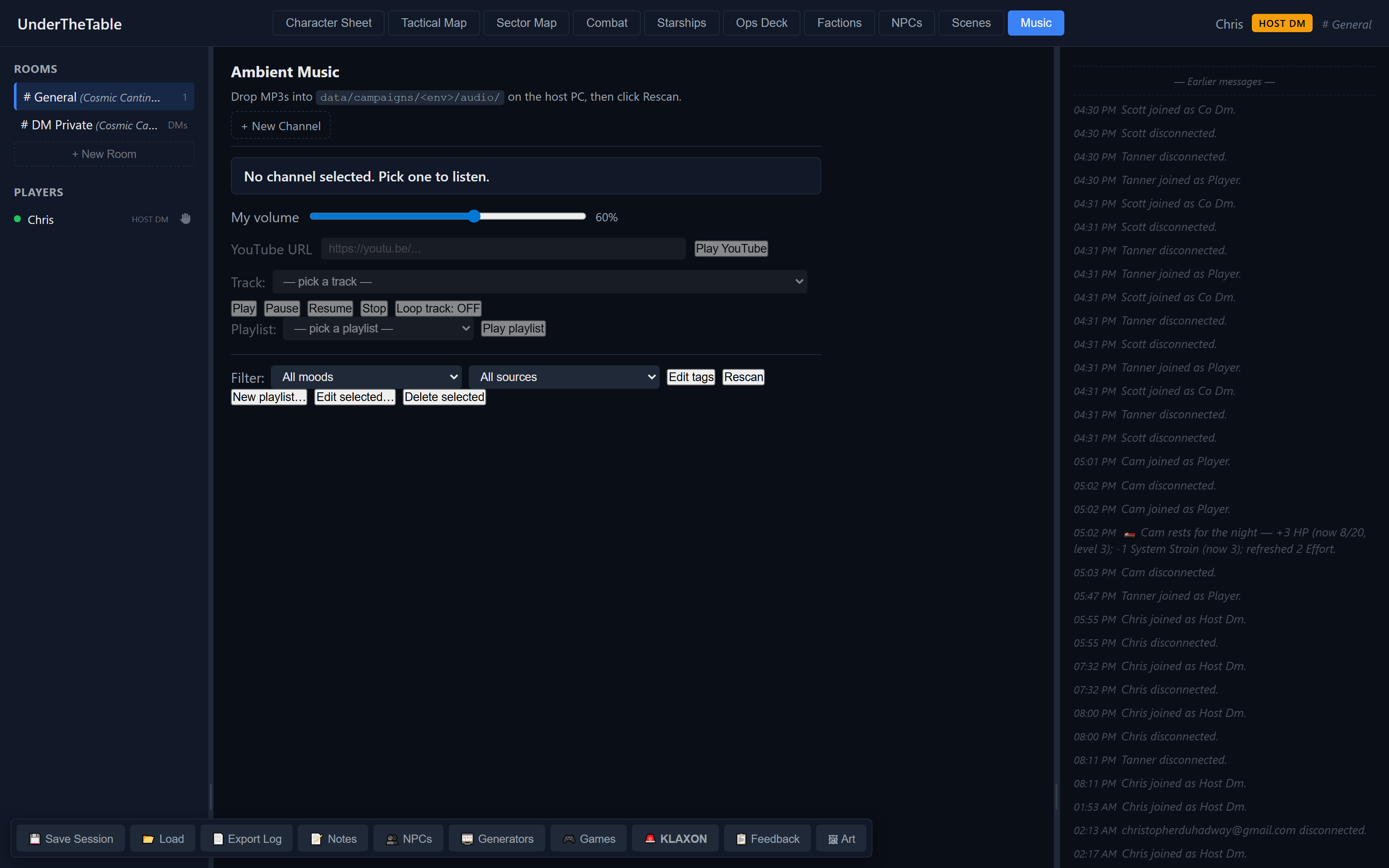
DM-curated audio channels. Drop MP3s into a folder, paste a YouTube URL, or build a playlist. Players hear the room you pick.
Docking bay hum, rain on the cathedral roof, alarm klaxon when things go sideways. The room sells the moment.
Bring co-DMs to the table — same seat
One seat, as many co-DMs as you want. They get the full GM toolkit — scenes, NPCs, factions, tactical maps, the OPS Deck — so one of you can run the main thread while another runs a side-mission, or you trade off weeks without re-explaining everyone's character.
Invite from Manage members, pick a role, send the link. Roles are enforced on the server, not just in the UI — a co-DM can't accidentally roll on a player's sheet, a player can't accidentally peek into the faction turn.
Owns the campaign.
Manages members, billing, and roles. The only seat that's billed.
Full GM tools.
Scenes, NPCs, factions, OPS Deck, tactical maps. Run a session solo or co-pilot yours.
Sheet and tokens.
Their own character sheet and tokens. Unlimited per campaign, no cap on group size.
What it costs
One tier. No upsells, no “Pro vs Plus vs Galactic Imperium.” You're either in or you're not.
$9.99 / month
per DM seat · billed monthly
- 14-day trial. No card at signup.
- Players free, unlimited per group.
- Bring as many co-DMs as you want. Same seat covers them all.
- Unlimited campaigns per seat.
- Daily snapshots. Export everything from Account anytime.
- 14-day money-back, no questions.
- Cancel from settings any time. Data kept 90 days after.
No card to start. We ask after the 14 days.
Frequently asked
Do players need to pay or install anything?
No on both. Players are free, no cap on group size. It's a web app — they click the link you send, log in (or sign up if it's their first time), and they're at the table.
Can I run with another DM?
Yes — and you don't pay extra for them. Invite co-DMs from Manage members and they get the full GM toolkit on your seat: scenes, NPCs, factions, the OPS Deck, tactical maps. Useful when one of you runs the main thread and another runs a side-mission, or when you trade off weeks. See co-DMs above for the role breakdown.
What if I don't like it?
14-day money-back, no questions. Cancel from settings whenever you want. We'd rather you leave happy than stay annoyed.
What is Stars Without Number?
A sci-fi tabletop RPG by Sine Nomine Publishing. Sandbox sci-fi with sector generation, factions, and one of the most readable rulebooks in the genre. There's a free edition on DriveThruRPG that's the whole game minus a few sourcebook chapters. Read that first if you've never tried it. Then come back.